

Table of Contents
Installing stair railings correctly improves safety, meets building codes, and enhances home design. Learn how to install stair railings step by step with expert tips.
Installing Stair Railings: Why Proper Installation Matters
Installing stair railings is a critical home improvement task that directly impacts safety, comfort, and visual appeal. A well-installed railing provides essential support, prevents falls, and completes the architectural look of a staircase. Whether you’re upgrading an interior stairway or adding protection to an outdoor set of steps, correct installation is just as important as material choice.
Poorly installed railings can loosen over time, fail to meet building codes, or create safety hazards—especially for children, seniors, and guests. Understanding how to install stair railings correctly ensures long-term durability and peace of mind.
Installing Stair Railings: Safety Functions and Building Code Basics
The primary purpose of stair railings is fall prevention. A securely installed handrail provides balance and guidance while moving up or down stairs. This function becomes even more important on steep staircases or in homes with multiple levels.
Building codes regulate installing stair railings to ensure safety. Most residential codes require handrails to be positioned 34–38 inches above stair treads. Baluster spacing is typically limited to no more than 4 inches apart to prevent children from slipping through.
Outdoor stair railings often have stricter requirements due to exposure to weather and higher slip risks. Always check local building codes before beginning installation to ensure compliance.
Installing Stair Railings: Choosing the Right Materials
Material choice plays a major role when installing stair railings.
Wood railings are popular for interior stairs due to their warmth and versatility. They are easy to cut, stain, and customize, making them ideal for DIY projects. However, they require periodic maintenance.
Metal railings, including aluminum and steel, offer durability and a modern appearance. They work well indoors and outdoors and resist warping over time.
Wrought iron railings add elegance and strength but are heavier and often require professional installation. Composite railings are low-maintenance and weather-resistant, making them ideal for decks and exterior stairs.
Choose materials based on location, style, maintenance needs, and budget.
Installing Stair Railings: Step-by-Step Installation Process
Installing stair railings begins with careful preparation.
Start by measuring the total stair run and marking the correct railing height. Locate wall studs or structural supports where brackets or posts will be mounted.
Attach mounting brackets securely using appropriate anchors or lag screws. For wall-mounted handrails, ensure every bracket is fastened into a stud or solid blocking.
Position the railing and check alignment using a level. Once straight, secure the railing firmly to all brackets. For post-mounted railings, set posts plumb and anchor them tightly before attaching rails and balusters.
After installation, test the railing by applying firm pressure to confirm stability.
Installing Stair Railings: DIY Kits vs Professional Installation
DIY kits simplify installing stair railings for straight staircases. These kits usually include pre-cut rails, balusters, and hardware with instructions. They are budget-friendly and ideal for standard installations.
Professional installation is recommended for curved staircases, custom designs, or heavy materials like wrought iron. Contractors ensure proper anchoring, precise measurements, and code compliance.
If safety or structural integrity is uncertain, professional installation is the safer choice.
Installing Stair Railings: Design and Style Considerations
Installing stair railings is also a design opportunity.
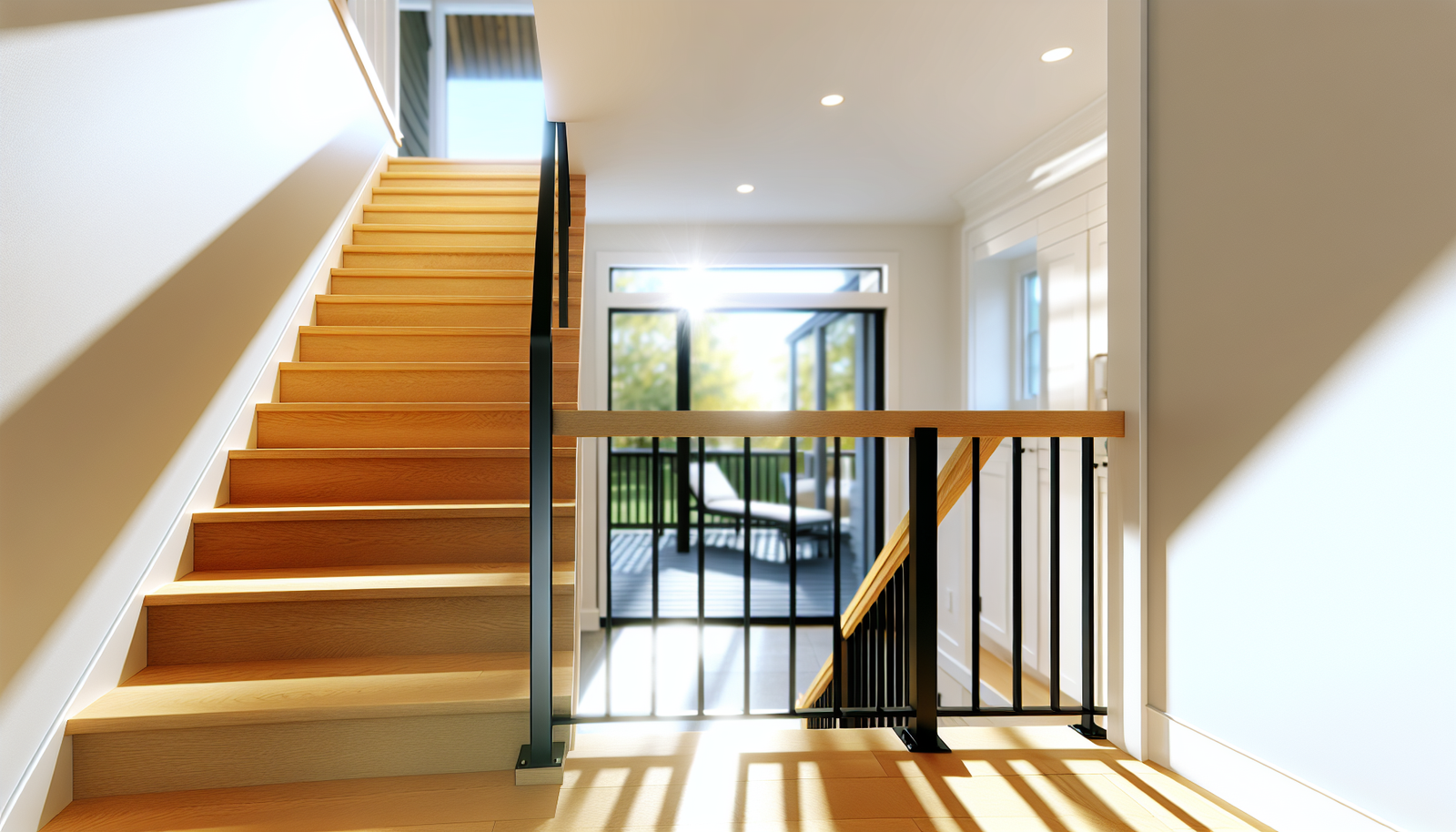
Black metal railings create a modern contrast in bright interiors. Wood railings complement traditional and farmhouse styles. Mixed-material designs—such as wood rails with metal balusters—offer visual balance.
For small spaces, slim profiles and open baluster designs keep staircases feeling light and open. Outdoor installations benefit from powder-coated finishes or sealed wood for longevity.
Choose a design that complements flooring, wall colors, and overall home style.
Installing Stair Railings: Maintenance for Long-Term Safety
Proper maintenance keeps installed stair railings safe and attractive.
Inspect railings regularly for loosened brackets or fasteners. Tighten hardware as needed to prevent wobbling.
Wood railings may need refinishing or sealing every few years. Metal railings should be cleaned periodically and checked for rust, especially outdoors.
Prompt repairs extend the lifespan of your railing and maintain safety.
Common Mistakes to Avoid When Installing Stair Railings
Avoid skipping measurements—incorrect height or spacing can violate codes.
Do not rely on drywall anchors alone for load-bearing railings. Always secure into studs or structural framing.
Never ignore movement or looseness after installation. A railing must remain rigid under pressure.
Conclusion
Installing stair railings correctly is essential for home safety, compliance, and visual appeal. By choosing the right materials, following proper installation steps, and maintaining your railing over time, you create a secure and stylish staircase.
Whether you choose a DIY kit or professional installation, careful planning ensures your stair railing remains a reliable feature for years to come.