

Table of Contents
Learn smart, long-lasting fence repair solutions for damaged fence posts and vinyl fences, including causes, repair methods, and when to hire professionals.
Fence Repair: What Homeowners Need to Know First
Fence repair is an essential part of maintaining property boundaries, safety, and curb appeal. Over time, weather exposure, soil movement, and general wear can weaken even high-quality fencing materials.
Whether your issue involves a leaning post, cracked vinyl panels, or storm damage, understanding proper repair strategies helps prevent expensive replacements and future problems.
This guide explains common fence issues, effective repair methods, and how to choose the right local service when professional help is needed.
Common Fence Problems and Why They Happen
Many fencing issues begin subtly and worsen if ignored. The most frequent problems include leaning posts, broken panels, and warped or cracked vinyl sections.
Soil movement is a major contributor. Heavy rain, erosion, and freeze-thaw cycles loosen the ground around posts, reducing stability. Improper installation—such as posts set too shallow—accelerates this issue.
Weather exposure also takes a toll. Wood can dry, split, or rot over time, while vinyl may become brittle in extreme temperatures. Strong winds or impact damage can loosen rails and fasteners, causing sections to shift or collapse.
Early signs to watch for include slight tilting, loose hardware, hairline cracks, or panels that no longer sit flush. Addressing these warning signs early prevents larger structural failures.
Why Fence Posts Matter Most
Fence posts are the foundation of any fence system. When a post weakens, surrounding sections are placed under stress, leading to misalignment and instability.
Warning signs of post failure include movement when pushed, visible rot at ground level, cracks, or rust in metal supports. Ignoring these issues often results in damage spreading to rails and panels.
Timely post repairs maintain alignment, improve safety, and help extend the life of the entire fence structure.
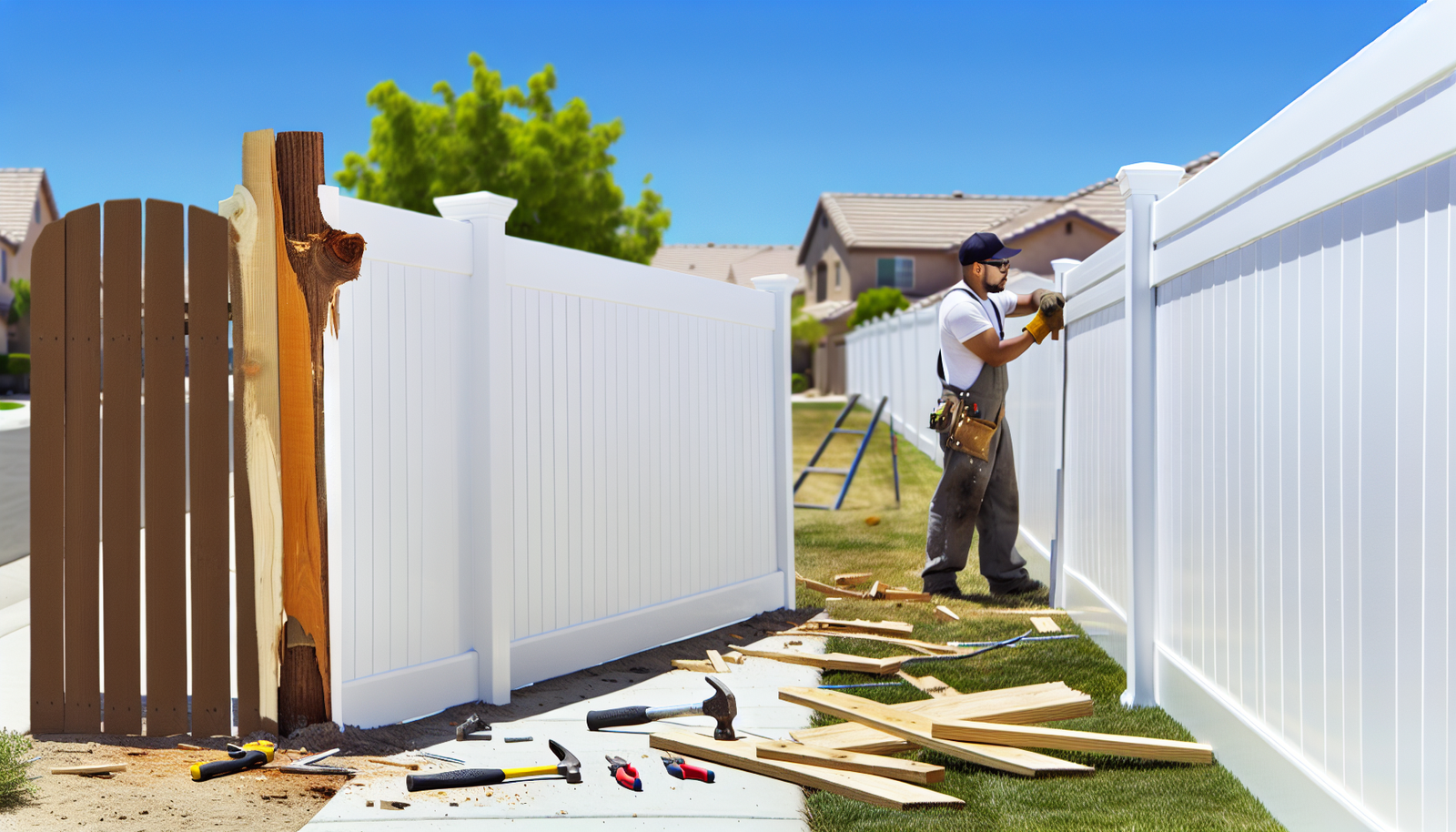
How to Repair a Fence Post Step by Step
Start by clearing the work area and confirming there are no underground utilities. Remove nearby panels or rails to access the damaged post.
Dig around the base until the old footing is exposed. Remove the post completely, including any loose concrete or debris. For vinyl fencing, disassemble rails carefully to avoid cracking.
Dig a new hole roughly one-third the post’s height, usually 24 to 36 inches deep. Position the replacement post, check alignment with a level, and ensure it follows the fence line.
Set the post using quick-setting concrete, sloping the top slightly for water runoff. Allow the footing to cure fully before reattaching panels. A properly set post restores strength and stability.
Special Considerations for Vinyl Fence Repairs
Vinyl fencing requires a slightly different approach. While it does not rot, it can crack, fade, or loosen over time.
Inspect panels for fractures, discoloration, or loose connections. Minor cracks can sometimes be fixed using vinyl patch kits that match the original color and finish.
For large cracks or warped panels, replacement is usually the best option. Always match the manufacturer’s dimensions and style to ensure proper fit and appearance.
Applying UV protectant products annually can help reduce fading and brittleness, extending the fence’s lifespan.
When to Hire a Professional Fence Repair Service
Some repairs are manageable DIY projects, but others benefit from professional expertise. Local contractors understand soil conditions, climate challenges, and regional building codes.
When choosing a service provider, look for proper licensing, insurance, and recent customer reviews. Request detailed written estimates that outline materials, labor, and timelines.
Experienced professionals can identify hidden issues, ensure secure installation, and often provide workmanship warranties for added peace of mind.
Maintenance Tips to Reduce Future Repairs
Routine inspections help prevent major problems. Walk your fence line seasonally and check for loose fasteners, early cracks, or soil erosion around posts.
Keep vegetation trimmed to reduce moisture buildup and pressure on panels. Ensure water drains away from post bases to minimize rot and shifting.
Small fixes handled early significantly reduce long-term repair costs and extend fence durability.
Final Thoughts
Proper fence repair protects property value, safety, and appearance. By understanding common issues, reinforcing posts correctly, addressing vinyl damage promptly, and using qualified professionals when needed, homeowners can avoid full fence replacement.
With consistent maintenance and timely repairs, your fence can remain strong, secure, and attractive for many years.