

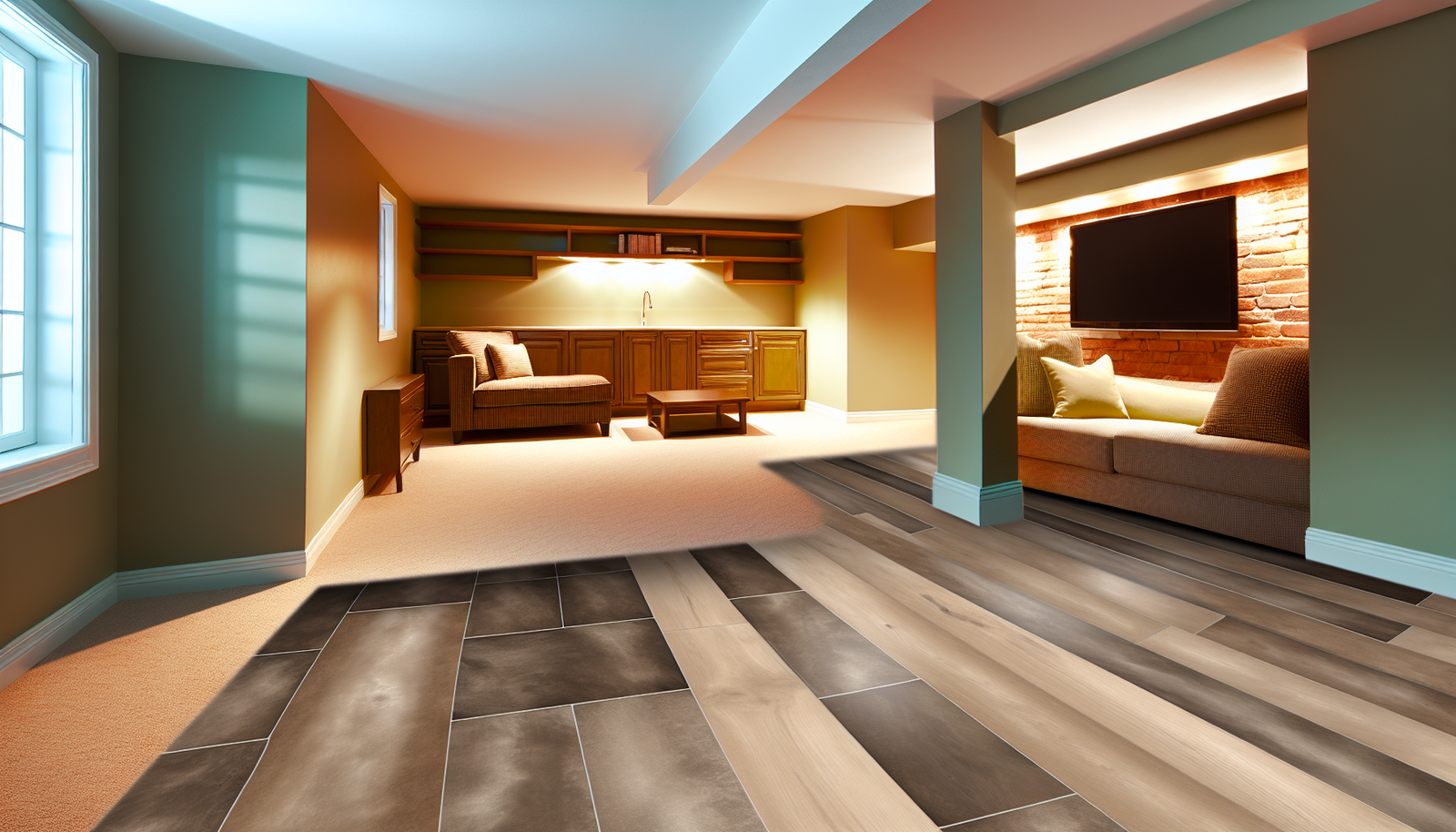
Discover the best flooring for basements to handle moisture, temperature changes, and daily use while improving comfort, durability, and style.
Flooring for Basements: What You Must Know Before Choosing
Flooring for basements requires careful planning due to moisture, cooler temperatures, and limited natural light. Unlike upper floors, basements sit below ground level and are more vulnerable to humidity and water intrusion.
Choosing the wrong material can lead to warping, mold, or costly replacements. The right basement flooring, however, can turn a dark, damp space into a comfortable and functional living area.
This guide explains basement flooring challenges, compares top materials, and helps you choose the best solution for your home and budget.
Flooring for Basements Challenges You Should Consider
Basements face environmental conditions that standard flooring often cannot handle. Moisture is the biggest concern. Water vapor can rise through concrete slabs even without visible leaks.
Temperature is another factor. Basement floors are naturally colder, which affects comfort and material stability. Some flooring types crack, curl, or separate when exposed to temperature fluctuations.
Lighting also matters. Many basements lack windows, so flooring color and finish can influence how bright and inviting the space feels.
Because of these factors, flooring for basements must be water-resistant, stable, and easy to maintain.
Best Flooring for Basements: Top Material Options
Luxury Vinyl Flooring for Basements
Luxury vinyl plank and tile are among the most popular flooring for basements. They are waterproof, durable, and comfortable underfoot.
Vinyl resists mold and works well over concrete. Modern designs mimic hardwood and stone convincingly.
Tile Flooring for Basements
Ceramic and porcelain tile offer excellent moisture resistance. They are ideal for laundry rooms or basements with higher water risk.
Tile is durable but can feel cold. Adding radiant heating or area rugs improves comfort.
Engineered Wood Flooring for Basements
Engineered wood provides a real-wood appearance with better moisture stability than solid hardwood. It works best in dry, fully finished basements.
It is not flood-proof, so water exposure should be minimal.
Concrete Flooring for Basements
Polished or stained concrete is extremely durable and moisture-resistant. It works well in modern or industrial-style basements.
Concrete can feel hard and cold, but rugs and insulation help.
Carpet Tiles for Basements
Carpet tiles add warmth and sound absorption. Individual tiles are easy to replace if damaged.
They require a dry basement and proper vapor barriers to avoid moisture issues.
How to Choose the Right Flooring for Basements
Start by evaluating moisture levels. Look for signs of dampness, musty odors, or past flooding. Moisture-prone basements need waterproof flooring.
Next, consider how the basement will be used. Living spaces benefit from warmer flooring, while gyms and storage areas need durability.
Comfort matters too. Subfloor systems and underlayment improve insulation and reduce cold floors.
Budget is also key. Vinyl and concrete offer strong long-term value, while tile and engineered wood may require professional installation.
Installing Flooring for Basements the Right Way
Preparation is critical for successful basement flooring installation. Concrete subfloors must be clean, level, and dry.
Moisture testing is recommended before installation. Vapor barriers or drainage mats help protect flooring materials.
Floating floors like vinyl and laminate are DIY-friendly, while tile and engineered wood often require professional installation.
Maintaining Flooring for Basements Long Term
Maintenance depends on material choice. Vinyl and tile need regular sweeping and damp mopping.
Engineered wood requires minimal moisture during cleaning. Carpet tiles should be vacuumed frequently and dried quickly if spills occur.
Humidity control is essential. Keeping indoor humidity below 60% prevents mold and extends flooring lifespan.
Making Basement Flooring Both Stylish and Practical
Flooring for basements doesn’t have to be boring. Light colors help brighten dark spaces.
Wood-look vinyl offers warmth without moisture risk. Area rugs add comfort and design flexibility.
Choosing the right flooring creates a basement that feels like a natural extension of your home.
Conclusion
The best flooring for basements balances moisture resistance, durability, comfort, and style. By understanding basement conditions and selecting suitable materials, you can create a functional and inviting space.
With proper installation and maintenance, the right basement flooring adds long-term value and everyday comfort to your home.