

Table of Contents
Learn how to Fix a Cracked Ceiling the right way with this step-by-step guide covering causes, tools, repairs, priming, painting, and prevention for long-lasting results.
Learning how to Fix a Cracked Ceiling is essential for maintaining the beauty and structural integrity of your home. Ceiling cracks may look alarming, but most can be repaired easily when you understand the causes and follow proper repair techniques. This comprehensive guide covers everything you need to fix cracks correctly and prevent them from returning.
Understanding Why Ceiling Cracks Form Before You Fix a Cracked Ceiling
Before you Fix a Cracked Ceiling, it’s important to understand what caused the damage.
Common Causes of Ceiling Cracks
Short, manageable paragraphs for easy reading:
Natural settling:
Homes shift over time. As framing adjusts, hairline cracks can form where walls meet ceilings or along seams.
Moisture damage:
Leaking roofs, plumbing issues, or high humidity weaken plaster and drywall. Moisture-related cracks are often yellow, brown, or soft to the touch.
Temperature changes:
Hot and cold cycles cause materials to expand and contract, creating stress cracks.
Poor installation:
Incorrect drywall fastening or insufficient joint compound can lead to premature cracking.
Structural concerns:
Wide, jagged, or bowing cracks may indicate a deeper issue. These require professional inspection before repairing.
When to Call a Professional
If cracks widen quickly, sagging appears, or you suspect hidden water damage, consult a contractor before attempting to Fix a Cracked Ceiling yourself.
Tools and Materials You Need to Fix a Cracked Ceiling
Gathering the correct tools ensures a smooth repair. Here’s what you’ll need:
Putty knife
Joint compound or spackling paste
Fiberglass mesh tape or drywall tape
Sandpaper (fine grit)
Primer
Ceiling paint
Safety gear: goggles, dust mask, gloves
Choose high-quality materials—better joint compound and tape reduce the chance of cracks returning.
Preparing the Area Before You Fix a Cracked Ceiling
Thorough preparation is key to long-lasting results.
Step 1: Protect your space
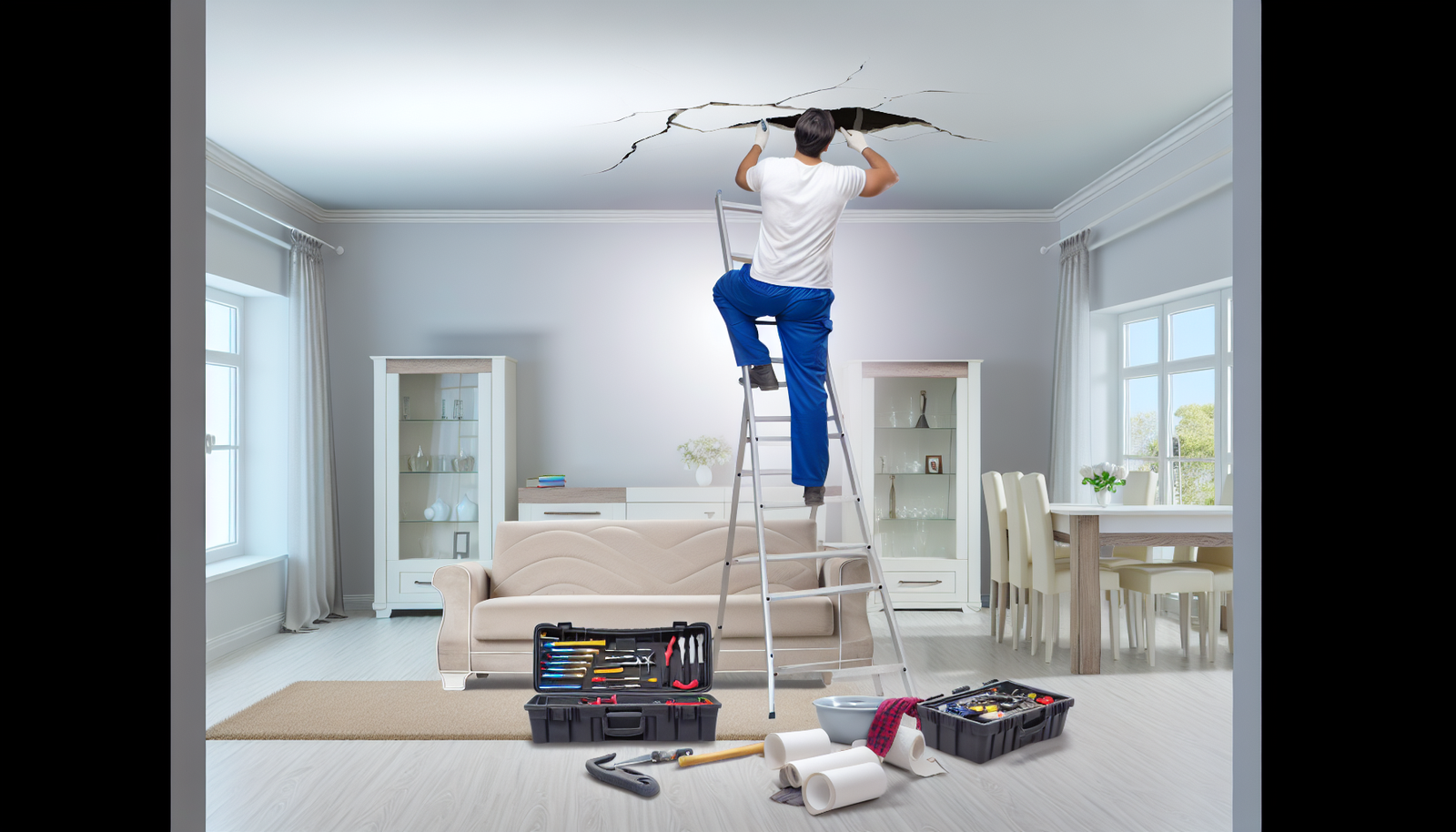
Move furniture aside or cover it. Place drop cloths on the floor. Position your ladder on stable ground.
Step 2: Inspect the crack carefully
Look for stains, soft spots, or crumbling plaster. If moisture is present, repair the source and allow the ceiling to dry completely before continuing.
Step 3: Clean and open the crack
Use a utility knife to widen hairline cracks slightly. This allows the patching material to bond deeply instead of sitting on the surface. Brush away dust and wipe the area clean.
How to Fix a Cracked Ceiling: Step-by-Step Repair Process
Here’s the precise method used by professionals to Fix a Cracked Ceiling:
Step 1: Apply tape for reinforced cracks
For wide or shifting cracks, press mesh tape over the opening. Hairline cracks can skip this step.
Step 2: Fill the crack
Apply a thin layer of joint compound using a putty knife. Press firmly to fill the crack completely.
Step 3: Feather the edges
Spread the compound beyond the crack to blend the patch with the surrounding ceiling.
Step 4: Let the first coat dry
Drying may take 12–24 hours. Do not rush this step.
Step 5: Sand and apply additional coats
Lightly sand the dried surface. Apply a second thin coat and feather it wider. Sand again after drying.
A third skim coat is sometimes needed for perfection.
Priming, Painting, and Preventing Future Ceiling Cracks
A flawless finish requires proper priming and painting.
Prime the repair
Use stain-blocking primer to prevent flashing or uneven color. Feather the primer outward for a smooth blend.
Paint the ceiling
Use matching ceiling paint (flat finish recommended). Apply light, even coats. If your ceiling has texture, recreate it before painting using a spray texture or hand-applied finish.
Prevent cracks from returning
Keep humidity between 30–50%
Fix roof or plumbing leaks immediately
Maintain stable indoor temperatures
Inspect ceilings yearly for early signs of damage
Proper maintenance ensures your work lasts and reduces the need to Fix a Cracked Ceiling again.
Conclusions
Knowing how to Fix a Cracked Ceiling gives you the power to restore your home quickly and confidently. By understanding the causes, using the right tools, and following professional repair steps, you can achieve a flawless finish that lasts. With good maintenance habits, your ceiling will remain smooth, safe, and beautiful for years to come.